 how-to
How to Accessorize a Jewel Tone Evening Gown in 5 Steps
Last Updated: November 4, 2026
Quick Summary
To accessorize a jewel tone evening gown, choose a few carefully chosen pieces rather than a full matching set, and build a three-color formula of one metal, one neutral, and one accent. Gold suits warm shades like emerald and ruby, while silver or platinum suits cooler shades like sapphire and amethyst. Let the neckline decide where jewelry belongs, and keep the look balanced so the gown stays the focus.
- Build each look from three colors: one metal, one neutral, and one accent.
- Gold suits emerald, ruby and burgundy; silver or platinum suits sapphire and amethyst.
- High necks or structured collars usually need only earrings, not a necklace.
- Deep V or open back necklines leave room for a necklace to shine.
- Add texture to jewelry only where the gown is plain, not on sequined or beaded fabric.
Table of Contents
- Why Jewel Tones Need Careful Accessorizing
- What Colors Complement Jewel Tones
- Gold or Silver Jewelry With a Jewel Tone Dress
- Choosing Jewelry to Wear With an Evening Gown by Neckline
- Shoes and Clutches That Finish a Jewel Tone Look
- Step-by-Step Method for Accessorizing a Bold Gown
- Booking Your Next Evening Look With Shea Marne
- Frequently Asked Questions
Why Jewel Tones Need Careful Accessorizing
Jewel tones like emerald, sapphire, ruby, and amethyst are rich and bold. Many customers choose these colors for weddings and milestone events because they stand out in a crowd. The challenge is that a bold gown already does a lot of the talking.
Accessories that are too loud compete with the dress. Accessories that are too quiet disappear. The goal is balance.
A jewel tone evening gown generally works best with a few carefully chosen pieces rather than a full set of matching jewelry. Less often means more here.
What Colors Complement Jewel Tones
Jewel tones are not one color family, they are five distinct hues with different undertones, and the accessory palette that flatters emerald is not the one that flatters sapphire. The most reliable approach is to build a three-color formula for each gown: one metal, one neutral, and one accent. That gives you a repeatable decision instead of a pile of maybes.
Emerald (green, usually warm-leaning). Gold is the strongest metal pairing; yellow gold picks up the warmth in the green and keeps the look rich rather than cold. Pair with a black clutch and black strappy heels, then add one accent in cream, champagne, or deep forest. Avoid bright silver as the primary metal, it can make emerald read cooler and flatter than intended.
Sapphire (blue, usually cool-leaning). Silver, white gold, and platinum are the natural partners; they reinforce the cool cast of the blue. A navy or black clutch keeps the look tonal, and a single accent in ice blue, dove gray, or pearl works better than a warm accent. Rose gold can work here, but treat it as the accent metal, not the base.
Ruby (red, warm-leaning). Gold again leads, and rose gold is a close second because it echoes the red without matching it. Black is the safest neutral for shoes and bag; a cream or ivory accent softens the look for daytime-into-evening events. Skip silver as the main metal unless the ruby leans pink rather than true red.
Amethyst (purple, cool-leaning). Silver and white gold suit true amethyst; rose gold flatters the pinker, lavender-leaning versions. Charcoal, black, or deep plum are the neutral choices. A metallic silver clutch reads cleaner than gold against most amethyst shades.
Burgundy (deep red-purple, neutral to warm). This is the most forgiving jewel tone. Gold, rose gold, and even mixed metals work; black and chocolate brown are both safe neutrals. A burgundy gown also handles a tonal look well, a plum or wine clutch creates depth without contrast.
Two rules cut across all five colors. First, match the metal to the gown's undertone, not to your skin tone alone; the gown is the larger surface and sets the temperature. Second, when you want contrast, pull the accent color from the gown's own family (a lighter or darker version of the same hue) rather than introducing an unrelated bright. Keeping the metal and neutral fixed and letting only the accent change is one way to keep a bold gown from looking busy.
Watch out: A bright contrasting accent (say, a red clutch with an emerald gown) can work, but it becomes the focal point and forces the jewelry to recede. If you want the gown to stay the star, keep the accent within the gown's color family.
Gold or Silver Jewelry With a Jewel Tone Dress
Gold is the traditional partner for jewel tones. Warm gold tones complement emerald, ruby, and burgundy beautifully. Silver and platinum finishes suit sapphire, amethyst, and cooler shades.
Rose gold offers a middle path. It works with almost any jewel tone and feels modern.
Mixing metals is possible, but keep it intentional. Pick one main metal and use the other in only one small accent piece.
Choosing Jewelry to Wear With an Evening Gown by Neckline
Your neckline decides where jewelry belongs. A high neck or structured collar usually needs only earrings. A deep V or open back gives a necklace room to shine.
Statement Earrings and Necklines
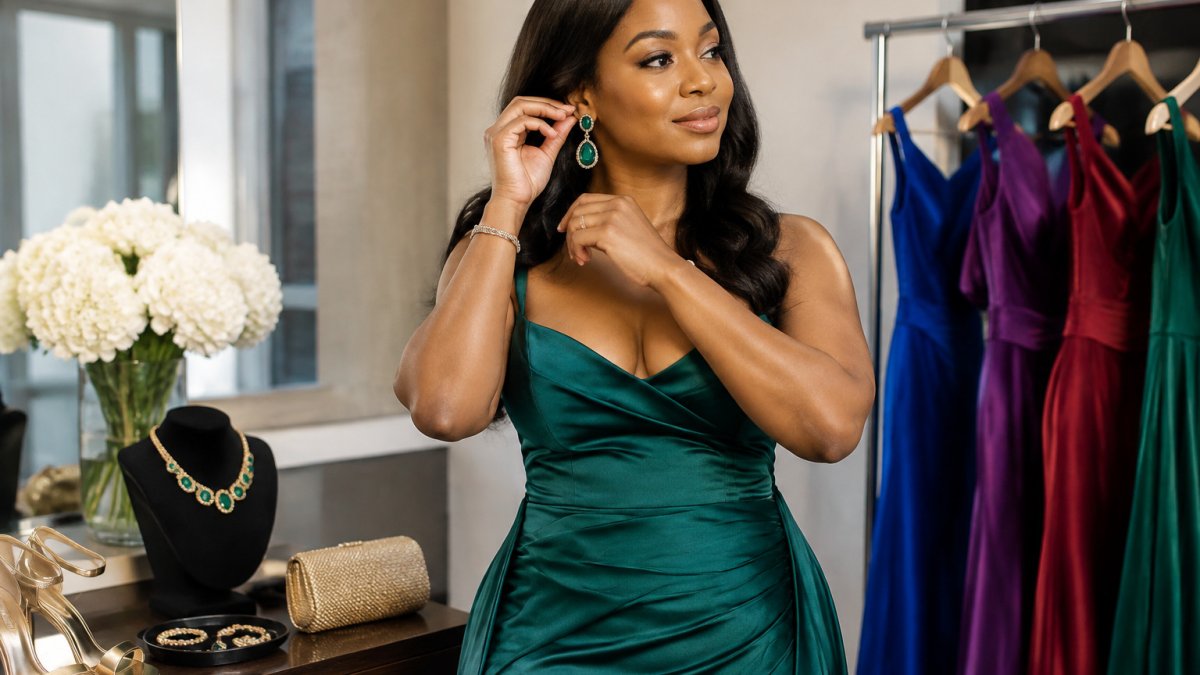
Statement earrings work well with simple necklines. Teardrop earrings draw the eye down and soften a sharp silhouette. If the gown has a dramatic neckline, choose smaller studs or hoops so the earrings do not fight the dress.
Bracelets and Rings as Finishing Pieces
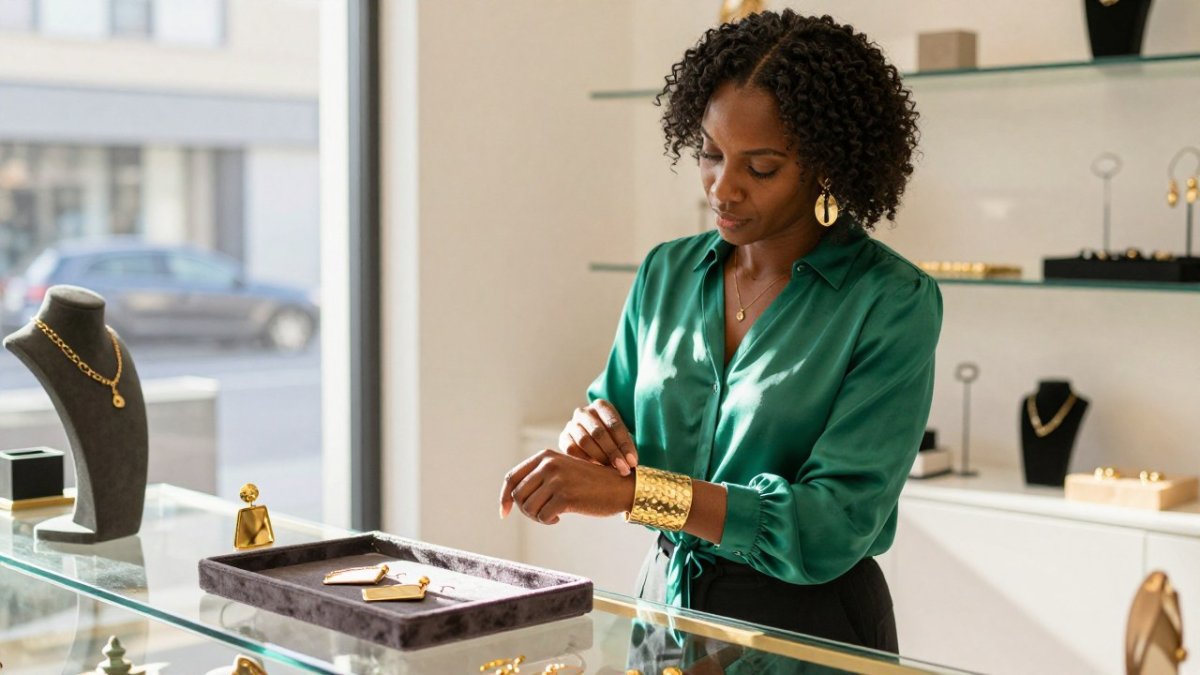
A single gem bracelet or cuff can finish the look without adding bulk. Rings work best when they echo the metal of your other jewelry. Keep stacks minimal if the gown already has embellishment.
Shoes and Clutches That Finish a Jewel Tone Look
Black ankle-strap heels are a classic choice. Metallic heels in gold or silver also pair well with jewel tones. Keep shoes simple so the gown stays the focus.
A small evening bag or clutch completes the outfit. Black, metallic, or a shade pulled from the gown all work. For cooler evenings, a cashmere cape or faux-fur stole adds warmth and polish.
Step-by-Step Method for Accessorizing a Bold Gown
Accessorizing a jewel tone gown comes down to a few deeper decisions: whether to wear a necklace at all, how the fabric changes what you can add, and what the occasion permits. Use this sequence.
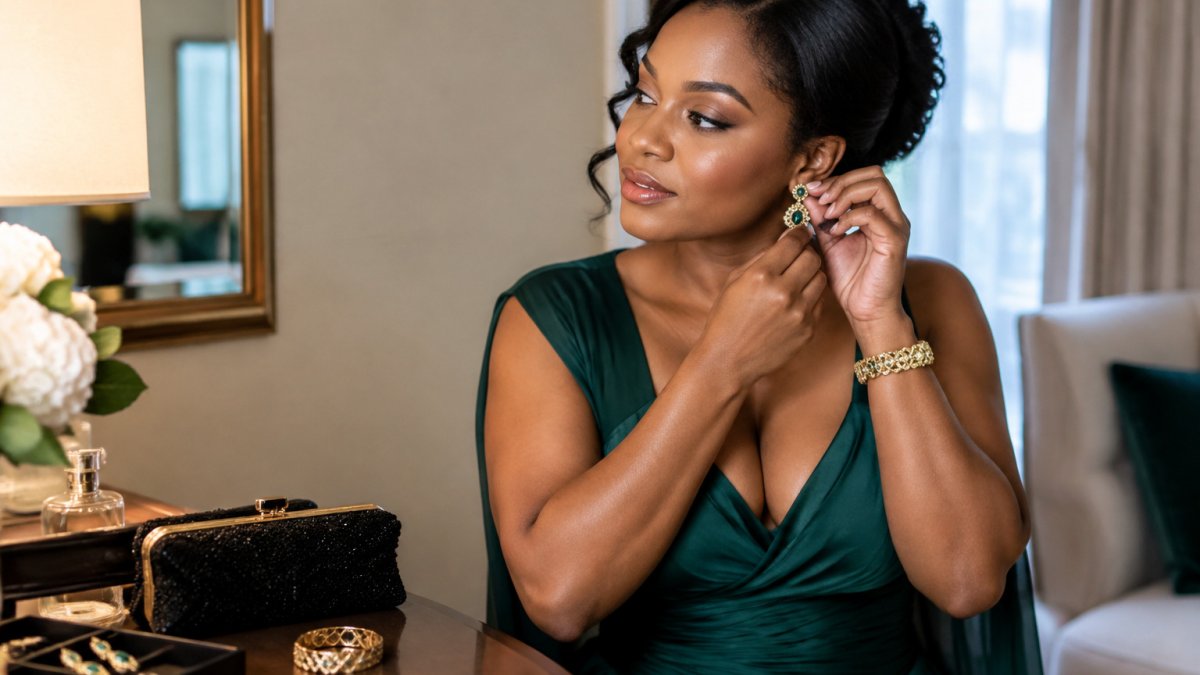
Step 1: Read the gown's three signals, color, neckline, and fabric. Color sets your metal and neutral (see the formulas above). Neckline sets where jewelry can live. Fabric sets how much texture you can add before the look turns cluttered. Write these three down before you open a jewelry box.
Step 2: Decide necklace or no necklace from the neckline. A high neck, halter, one-shoulder, or illusion neckline usually means no necklace, the neckline is already the statement, and a chain competes with it. A deep V, scoop, or strapless neckline leaves room for a pendant or a short collar. Open backs are the exception: a back-drop necklace can be the best piece in the outfit, but only if the back is genuinely bare.
Step 3: Match earring weight to the neckline's visual weight. If the neckline is dramatic, go smaller on earrings (studs, small hoops, short drops). If the neckline is simple, statement earrings, teardrops, chandeliers, long drops, carry the look. The mistake is doing both at full volume.
Step 4: Add texture only where the gown is plain. This is the step most guides skip. Velvet absorbs light and can take a matte or brushed metal plus one textural piece. Sequins and beading already supply shine, so keep jewelry smooth and minimal, a polished cuff, not a beaded bracelet. Lace needs clean, simple metal so the pattern stays readable. High-shine satin is the hardest: it reflects, so choose one finish (all polished or all matte) and do not mix.
Step 5: Let the hairstyle settle the earring question. An updo exposes the ear and neck, so earrings and a back necklace earn their place. Hair worn down covers the ear and the neckline sides, which means earrings should be smaller and a necklace should sit lower or be skipped. Decide hair before jewelry, not after.
Step 6: Set the dress code, then subtract. Black-tie and formal weddings tolerate more metal and a statement earring; cocktail and semi-formal call for one statement piece and quieter everything else. For a wedding, avoid anything that reads as competing with the couple's palette, a neutral clutch and one metal is the safe floor. Then remove one item. If the gown is bold, the look is usually finished one piece earlier than you think.
Step 7: Choose shoes and bag last, in the neutral you already picked. Black, metallic, or a tonal shade from the gown, not a new color. A single gem bracelet or cuff and one ring echoing your main metal finish the look without adding bulk.
Watch out: The most common failure is stacking a statement earring, a necklace, a cuff, and a ring at once on a gown that already has shine or embellishment. If two pieces are competing for the same focal area, the face, the neckline, or the wrist, remove one before you leave.
The seven-step method reduces to a few decisions, summarised below so you can check each one at a glance.
| Step | What to decide | Key rule |
|---|---|---|
| 1 | Read color, neckline and fabric | Write all three down first |
| 2 | Necklace or none | High necks usually skip the necklace |
| 3 | Earring weight | Dramatic neckline means smaller earrings |
| 4 | Texture | Add texture only where the gown is plain |
| 5 | Hairstyle | Decide hair before jewelry |
| 6 | Dress code | Set the code, then remove one item |
| 7 | Shoes and bag | Stay in the neutral already chosen |
Booking Your Next Evening Look With Shea Marne
Shea Marne Luxury Collection offers couture clothing and handcrafted statement jewelry designed to pair with jewel tone gowns. Pricing depends on the piece, so check the website for current prices and sizing details. Visit browse our statement jewelry collection to see pieces that suit this look, or shop the Origami Textured Pleated Statement Dress in its jewel-toned colorways.
We recommend starting with one statement piece and building the rest of the look around it. For a full collection overview, explore the Shea Marne Luxury Collection. If you want styling ideas for formal occasions, our church first lady fashion guide covers elegant pairings for dressy events.
Frequently Asked Questions
What colors complement jewel tones?
Metallics such as gold, silver and rose gold pair well with emerald, sapphire, ruby, amethyst and burgundy. Black and neutral accessories keep a bold gown balanced, while contrasting or matching hues can add depth when kept to one or two accents. Choose the metal that suits your skin's undertone, and avoid adding more than one competing color to the look so the gown remains the focal point.
Should you wear gold or silver jewelry with a jewel tone gown?
Either works. Gold tends to warm up deep reds, plums and emeralds, while silver gives sapphire, amethyst and cobalt a cooler, crisper finish. Rose gold is a flattering middle option for burgundy and ruby. Pick the metal you already wear most often, and keep all visible metals consistent so the look feels intentional rather than mixed.
What shoes and clutch go with a jewel tone evening gown?
Black ankle-strap heels and a black or metallic clutch are the safest choices because they let the gown's color stand out. Metallic gold or silver shoes also work well with jewel tones. A clutch in a matching jewel shade can be used for a tonal look, but keep the shoes neutral so the outfit does not feel overly coordinated.
How do you accessorize a formal dress without overpowering it?
Choose one focal piece, such as statement earrings or a necklace, and keep bracelets and rings slimmer. Match the scale of your jewelry to the neckline: a high neck can carry bold earrings, while a deep V or open back suits a simpler necklace. Limit the palette to one metal and one neutral, and let the gown carry the color.