 how-to
How Do You Build a Capsule Wardrobe for Special Occasions?
Quick Summary
A special-occasion capsule wardrobe is a small set of formal pieces that suit the events on your calendar, with accessories changing the look for each one. Start by auditing your closet and listing upcoming events, then build around one core dress that you can wear to at least two or three occasions.
- Audit your closet and list the events for the next 12 months before you shop.
- Choose a core dress in a neutral or classic color that works for daytime and evening.
- Change shoes, jewelry, bag, and layers to restyle one dress for different occasions.
- Compare renting, borrowing, or tailoring against buying using cost per wear.
- If you expect to wear a piece fewer than three times, compare other options before buying.
Table of Contents
- What a Special-Occasion Capsule Wardrobe Is and Why It Works
- Audit Your Closet and Your Event Calendar
- Decode Dress Codes Before You Shop
- Build a Wedding Guest Capsule Wardrobe Around One Core Dress
- How to Style One Dress for Different Occasions
- Special Occasion Outfit Ideas Built From Jewelry and Accessories
- Choose Sustainable Occasionwear and Set Your Budget by Cost per Wear
- Plan Your Next Event Outfit From Your Capsule
- Frequently Asked Questions
What a Special-Occasion Capsule Wardrobe Is and Why It Works
Last Updated: November 1, 2026
A capsule wardrobe is a small set of versatile pieces that mix and match well.
Most women own plenty of clothes but still feel they have nothing to wear to a wedding or milestone party.
A special-occasion capsule fixes that. You choose a limited group of formal pieces that suit the events on your calendar.
Why it works:
- Fewer, better pieces. Each dress gets worn more often, so the cost per wear drops.
- Clear decisions. You know which dress fits which dress code before you shop.
- Less last-minute stress. A planned set of outfits means no frantic shopping the night before.
Watch out: Buying a dress for one event and nothing else leaves you with a single-use item.
Audit Your Closet and Your Event Calendar
Start with two lists: what you own, and what events you have coming up. Together they show the gaps your capsule needs to fill.
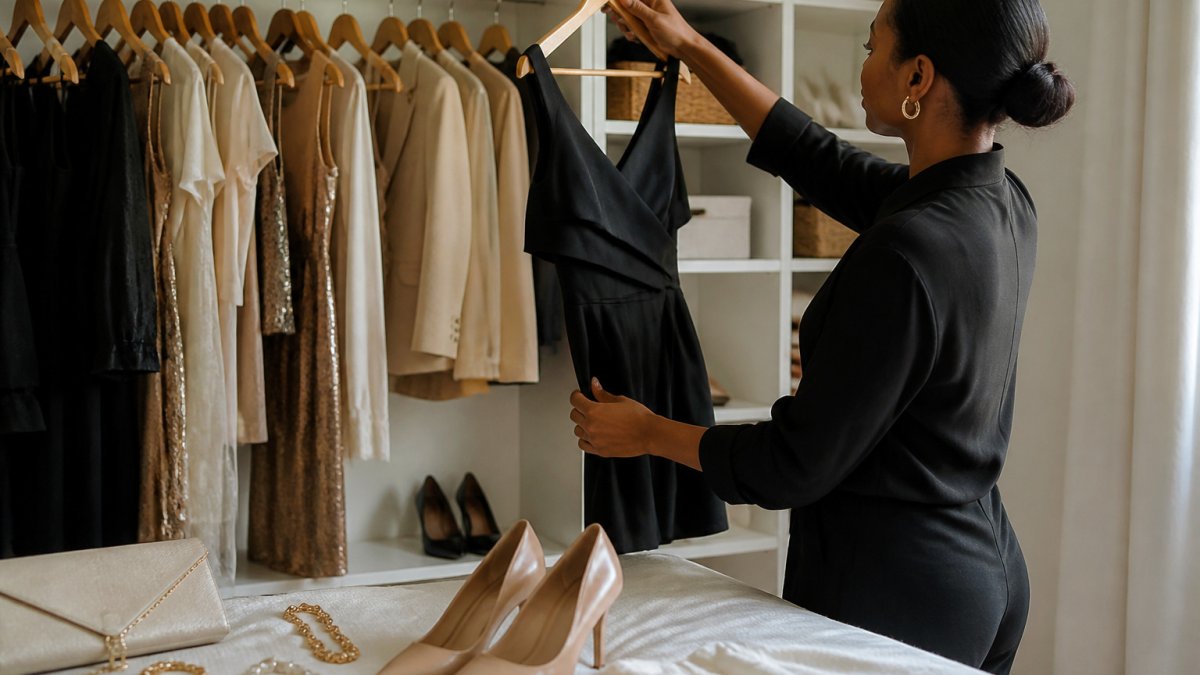
First, pull out every formal or semi-formal piece you own. Try each one on.
Next, list the events for the next 12 months. Include weddings, engagements, graduations, church events, galas, and work conferences.
Then compare the two lists:
- Which events have no matching outfit?
- Which pieces have never been worn to any event?
- Which items need alterations to fit well?
This audit shows you exactly what to buy and what to skip.
Decode Dress Codes Before You Shop
Dress codes tell you what to wear, but many invitations use vague terms. The fastest way to shop a capsule is to translate each code into a small set of garment, footwear, and accessory slots, then buy pieces that fill more than one slot. Below is a practical mapping you can carry to the store or keep on your phone.
| Dress code | Dress or separates | Footwear | Accessories | Fabric and fit notes |
|---|---|---|---|---|
| Black tie | Floor-length gown or formal column dress; tuxedo-style separates are acceptable at many venues | Strappy heels or dressy pumps, 2-3 inches | Clutch, fine jewelry or one statement piece, wrap or stole | Structured fabrics, crepe, satin, velvet; hem should clear the floor by about half an inch |
| Black tie optional | Long gown or a dressy midi with elevated fabric | Heels or dressy flats | Clutch and polished jewelry | Same as black tie, but a midi in satin or crepe reads correctly |
| Cocktail | Knee-length or midi dress; dressy separates with a skirt or tailored trousers | Heels, block heels, or dressy flats | Small bag, statement earrings or necklace (one focal point) | Fabric with some structure; avoid casual knits and denim |
| Semi-formal | Midi dress, dressy separates, or a tailored jumpsuit | Block heels, wedges, or polished flats | Structured handbag, understated jewelry | Below-the-knee hem, breathable fabrics for daytime |
| Festive or cultural attire | Traditional or culturally inspired dress, or a dress in bold color and fabric | Heels or dressy flats that suit the venue | Statement jewelry, wrap or shawl | Follow the host's cultural cues; ask if unsure |
| Church or ceremony | Modest dress or separates with sleeves and a hem below the knee | Closed-toe heels, flats, or low wedges | Simple jewelry, structured bag | Covered shoulders and knees; fabric that holds shape while seated |
| Business formal / networking | Tailored dress, suit, or dressy separates | Closed-toe pumps or loafers | Professional bag, understated jewelry | Structured fabrics; avoid anything strapless or overly short |
| Daytime garden or beach | Midi or maxi dress in breathable fabric; dressy separates | Wedges, block heels, or dressy sandals | Sun hat, light wrap, simple jewelry | Linen blends, cotton poplin; check whether the ceremony is on grass or sand |
Three rules make the table usable:
- Match the most formal element to the code. If the invitation says cocktail, the dress and shoes should both read cocktail; a formal gown with flat sandals reads mismatched.
- Let one element carry the formality. A simple dress plus statement jewelry and heels can meet cocktail; the same dress with flats and a tote reads daytime.
- Ask when the code is missing or contradictory. A quick text to the host or a check of the event website prevents an expensive mistake. Do not infer the code from the venue alone, a beach wedding can still call for cocktail attire.
Once you know which codes appear on your calendar, you can shop for pieces that satisfy two or three of them. A midi dress in a structured fabric, for example, can cover cocktail, semi-formal, and many church or ceremony events with only a shoe and jewelry change.
Build a Wedding Guest Capsule Wardrobe Around One Core Dress
Wedding guests have the hardest dress planning because they attend many events in one season. Choose one core dress that works for most of them, then add pieces that change its look.
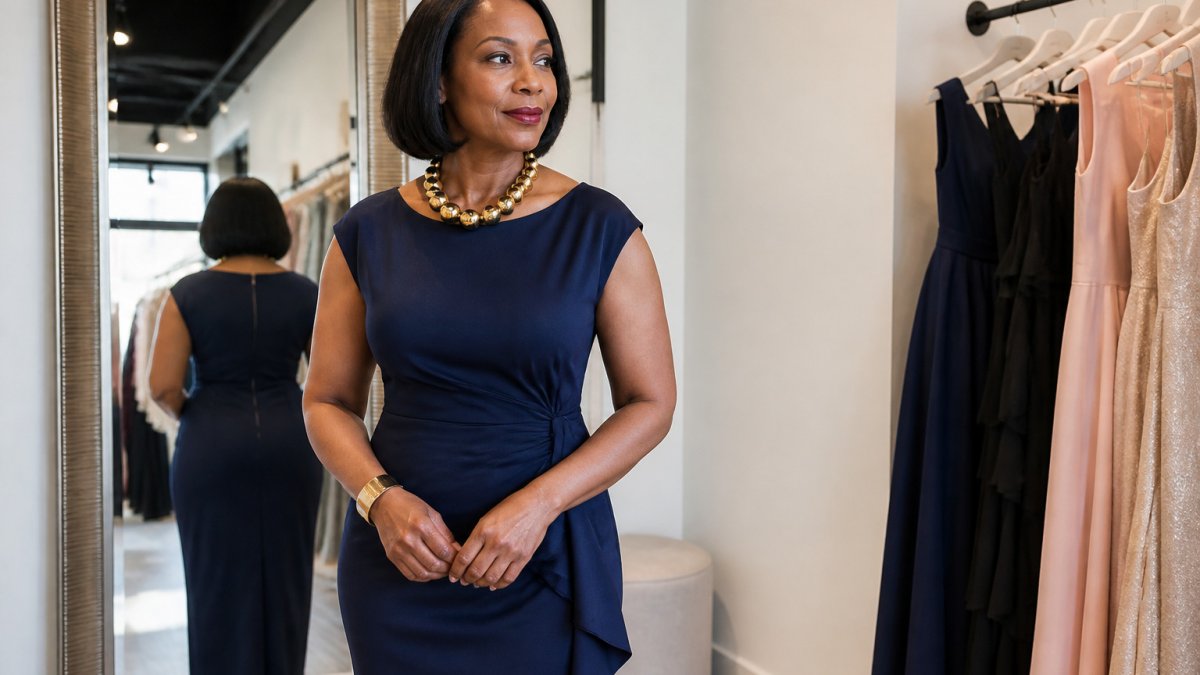
Look for a core dress with these traits:
- A neutral or classic color that suits many settings
- A cut that works for both daytime and evening events
- Fabric that holds its shape and resists wrinkles
For plus-size shoppers, look for inclusive sizing and clear size charts. Measure yourself before ordering, and read the fit notes.
Shea Marne Luxury Collection offers couture clothing with inclusive sizing. Browse affordable formal wedding guest dresses to compare options against your budget.
How to Style One Dress for Different Occasions
One dress can cover several events if you change the details. Here is a simple method:
- Start with the dress. Choose your core piece.
- Change the shoes. Heels or metallic flats for formal events, block heels for daytime.
- Swap the jewelry. Bold statement pieces for evening, smaller pieces for daytime.
- Add a layer. A structured jacket, shawl, or wrap for cooler venues or ceremonies.
- Adjust the bag. A clutch for evening, a structured handbag for daytime.
Each change takes about five minutes and costs far less than buying a new dress.
Common mistake: Wearing the same shoes and jewelry to every event. Changing one or two accessories makes a repeat outfit look planned, not repeated. See how to accessorize a wedding guest dress for more ideas.
Special Occasion Outfit Ideas Built From Jewelry and Accessories
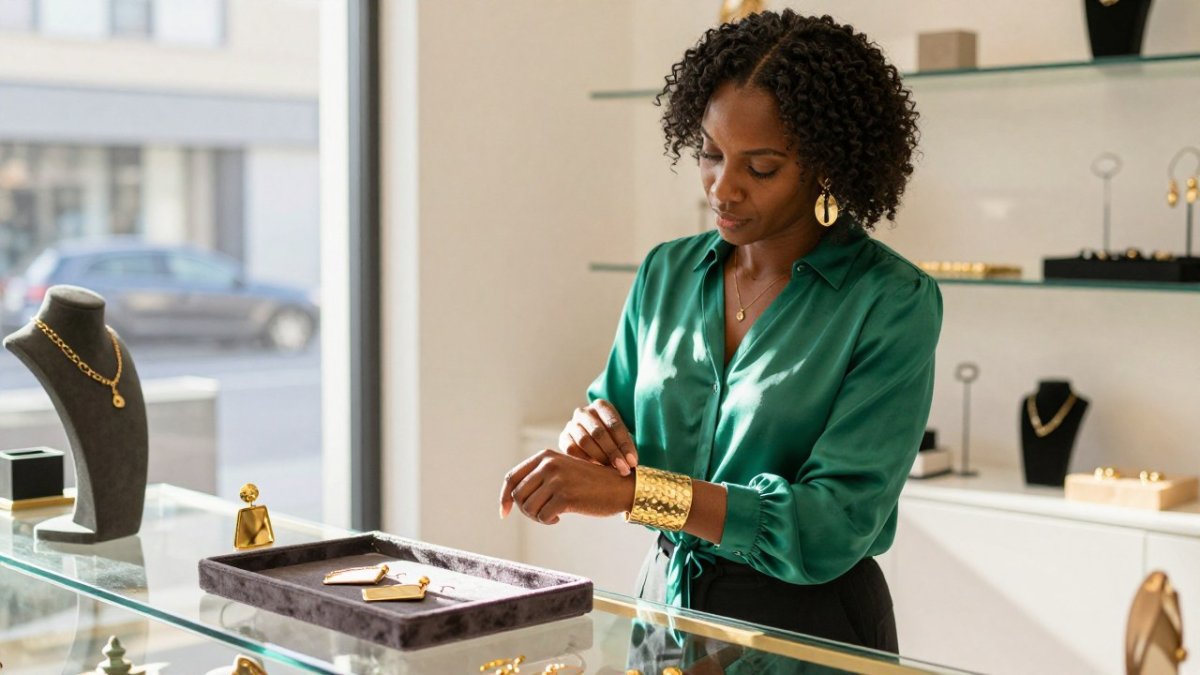
Statement jewelry can make a simple dress look like a new outfit. Try the Triple T Convertible Necklace to see how a sculptural piece works in an outfit.
Try these outfit formulas:
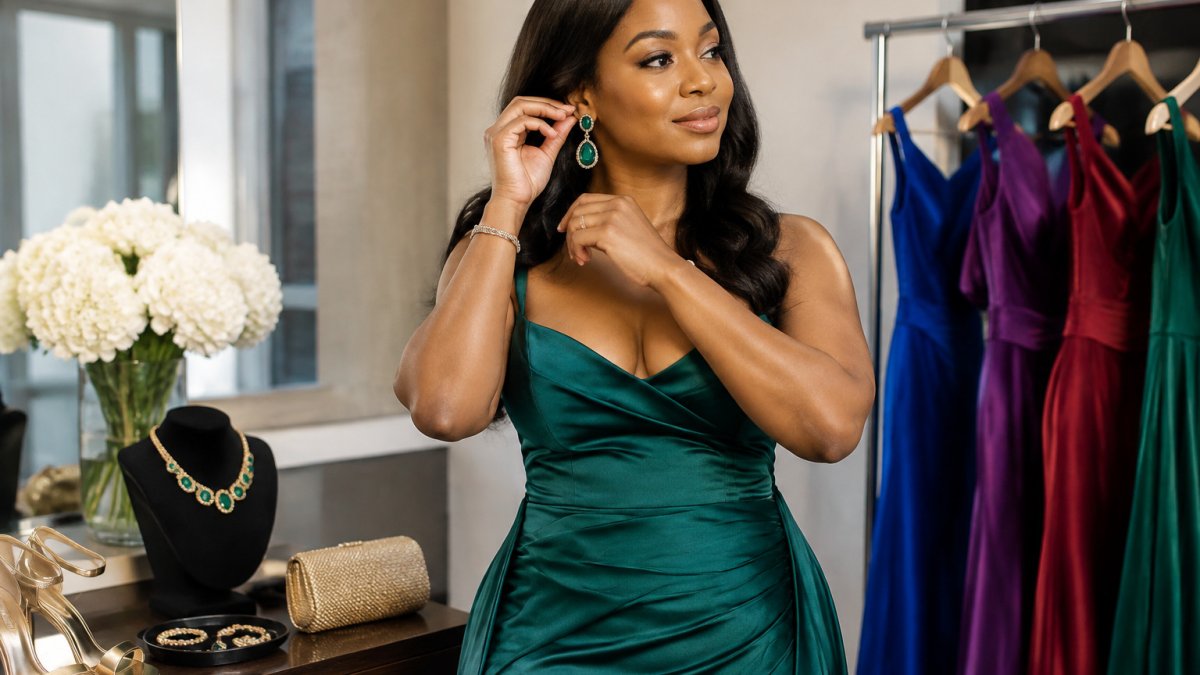
- Classic evening: Plain black dress, bold statement necklace, metallic clutch, heeled sandals.
- Cultural celebration: Vibrant patterned dress, sculptural necklace, neutral heels, structured wrap.
- Daytime event: Soft neutral dress, delicate necklace, flat or block-heel shoes, light jacket.
Keep the jewelry as the focal point. Let the rest of the outfit stay simple so the piece stands out. Read how to style handcrafted statement jewelry with confidence for a deeper guide.
Choose Sustainable Occasionwear and Set Your Budget by Cost per Wear
Special-occasion clothing is often worn only once or twice, which makes it expensive per use.
**1.
2. Rent. Best for a single black-tie or themed event where the dress would otherwise sit unworn.
3. Borrow or swap. Best for one-off events with a trusted friend or family member in a similar size.
4. Tailor what you own. Best when a piece fits everywhere except one spot, a hem, a waist, or a sleeve.
Run the cost-per-wear math before you decide
Cost per wear is the price divided by the number of times you expect to wear the piece. Use expected wears, not a best-case guess.
- A dress worn five times costs one-fifth of its price per wear, while the same dress worn once costs its full price per wear.
- Renting a dress for a single event typically costs less than buying a dress you will wear only once, but more than buying one you will repeat several times.
- Tailoring a dress you already own can add little per wear, often the lowest cost of all.
A simple rule: if you expect to wear a piece fewer than three times, compare renting, borrowing, or tailoring before buying. If you expect three or more wears, buying usually wins on cost per wear.
Set a season budget against your event calendar
- Count the events on your calendar for the next 12 months and note the dress code for each.
- Estimate the cost per wear of each candidate piece using expected wears.
- Set a fixed budget for the season and assign it first to pieces that cover the most events.
- Leave a small reserve for tailoring and cleaning, which are easy to forget.
To keep costs and waste down over time:
- Choose timeless cuts and colors you will wear for years.
- Buy quality fabric that holds up through repeated wear and cleaning.
- Consider renting or borrowing for a single event you will not attend again.
Compare the cost per wear of each option before you decide, and keep your budget realistic for the events on your calendar.
Plan Your Next Event Outfit From Your Capsule
With your core dress, accessories, and layers in place, planning each event takes minutes. Use this checklist for every invitation:
- Confirm the dress code.
- Choose the core dress from your capsule.
- Pick shoes and a bag that match the venue.
Keep a short log of each outfit you wear. This prevents repeating an outfit in front of the same guests and helps you spot which pieces earn the most wears.
A special-occasion capsule is not about owning less for its own sake. It is about owning pieces you will actually wear, styled in ways that reflect who you are. Start with your audit, decode your next dress code, and build from there.
Frequently Asked Questions
What is a special-occasion capsule wardrobe?
A special-occasion capsule wardrobe is a small, deliberately chosen set of dresses, separates, shoes, jewelry and accessories that can be combined into complete outfits for weddings, galas, milestone celebrations and formal events. Instead of buying a new outfit for every event, you select pieces that coordinate in color and formality so they mix and match. Most people build one around a core dress or a neutral palette, then add one or two statement pieces each season. The goal is a wardrobe that covers your real calendar of events with fewer, better-chosen items.
How many pieces should a special-occasion capsule wardrobe include?
Most people do well with roughly 10 to 15 occasionwear pieces, counting dresses, outfit separates, shoes and jewelry sets. Start by listing the events you attend in a typical year, then count how many distinct dress codes they fall under. A workable capsule usually includes two or three dresses that cover the most formal events, one or two versatile options for semi-formal gatherings, and a few accessories that change the look. Adjust the number to your calendar rather than aiming for a fixed total.
How can I style one dress for different special occasions?
Change the dress with accessories rather than buying a new one. Swap statement earrings or a handcrafted necklace for a wedding versus a networking dinner, switch shoes between heeled sandals and closed-toe pumps, and add a structured jacket, wrap or belt to shift the formality. Adjust the hair and makeup as well, since these signal the occasion as much as the clothing does. A single well-fitted dress in a neutral or rich jewel tone can cover a wedding, a gala and a milestone celebration with different finishing details.
How do I build a capsule wardrobe for weddings and formal events on a budget?
Start with one versatile core piece in a classic silhouette and a color you wear often, then add accessories before adding garments. Rent or borrow a dress for a single event if you only attend once a year, and buy outright only the pieces you will wear to several events. Calculate cost per wear by dividing the price by the number of times you expect to wear it, since a dress worn to four events costs far less per use than one worn once. Pricing depends on the piece, sizing and delivery, so check Shea Marne Luxury Collection's website for current prices or to request a quote.