 how-to
How to Spot Quality Couture Clothing Like a Pro
Last Updated: November 2, 2026
Quick Summary
To spot quality couture, start with the fabric: crush a section in your fist and release it, since good fabric springs back with few creases, then hold the garment up to check that it drapes with weight and structure. Turn it inside out to inspect finished seams, clean lining, even hems, and reinforced stress points, and check that patterns line up at the seams with no loose threads or skipped stitches.
- Natural fibers like silk, cotton, linen, and wool breathe, drape well, and age gracefully.
- You can judge a garment's quality in under a minute by checking pattern alignment, threads, buttons, and lining.
- French seams or bound edges prevent fraying, and hand-stitched hems signal higher craftsmanship.
- Shoulder seams should sit at the edge of your shoulder, and sleeves should end at the wrist bone.
- Don't equate a high price with high quality, since price reflects brand markup as well as craftsmanship.
Table of Contents
- Start With the Fabric: How to Check Clothing Fabric Quality
- How to Tell If Clothes Are Good Quality Before You Try Them On
- Signs of Well-Made Clothing: Seams, Stitching, and Finishing
- Couture Clothing Fit and Tailoring: What a Proper Fit Looks Like
- Quality Couture Details That Separate Handmade From Mass-Produced
- Common Pitfalls When Judging Quality Couture Clothing
- Shop Shea Marne's Couture Collection With Confidence
- Frequently Asked Questions
Start With the Fabric: How to Check Clothing Fabric Quality
Learning how to spot quality couture clothing starts with one sense: touch. Fabric is the foundation of any garment, and it tells you more about construction than any label ever will. The difference between a piece that lasts and one that pills after a few washes usually comes down to what it's made of.
Natural Fibers vs. Synthetic Blends
Natural fibers like silk, cotton, linen, and wool breathe, drape well, and age gracefully. For a closer look at heritage-driven craftsmanship, explore Bibiré African-inspired luxury fashion. Synthetic blends often cost less and resist wrinkles, but they can trap heat and pill over time. A quality couture piece usually leans toward natural fibers or a thoughtful blend that serves a purpose, such as added stretch for comfort. Check the care label inside the garment, not the price tag, to see what you're really buying.
The Hand Test and Drape Test
Two quick tests reveal a lot before you ever try a piece on. The Textile Exchange's fiber and materials guidance is a useful reference for understanding fiber content.
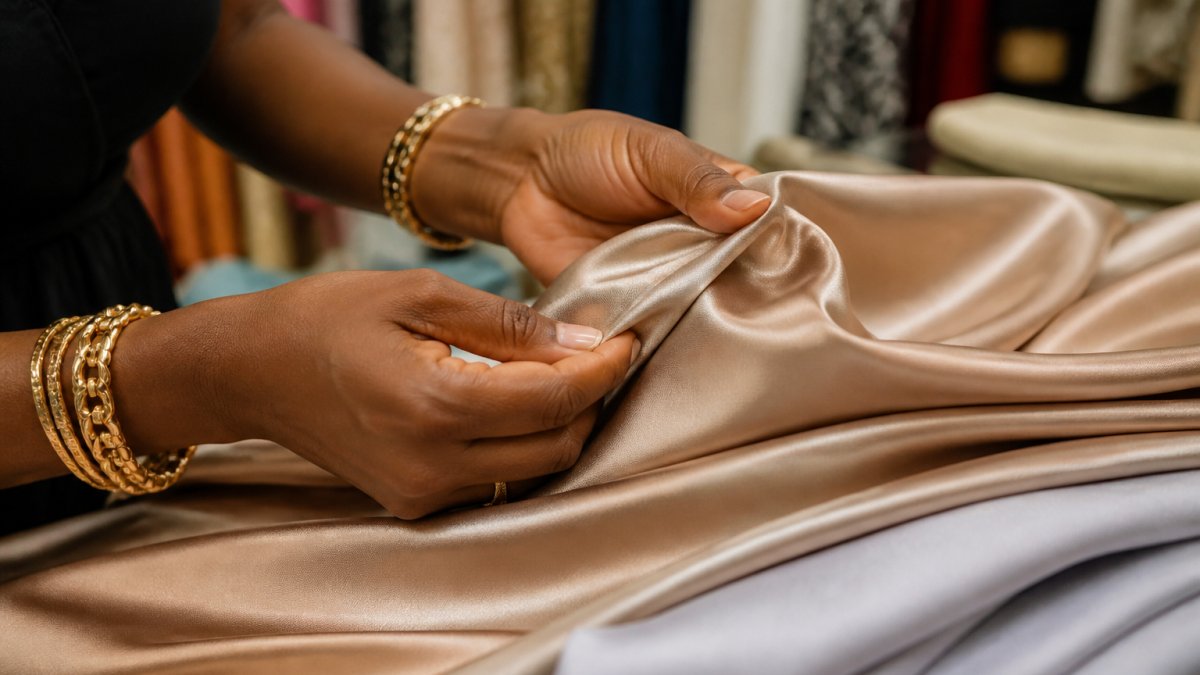
- Hand test: Crush a small section of fabric in your fist, then release it. Quality fabric springs back with few creases.
- Drape test: Hold the garment up and let it fall. Good fabric flows with weight and structure, not stiffness or flimsiness.
How to Tell If Clothes Are Good Quality Before You Try Them On
You can judge a garment's quality in under a minute without a fitting room. The trick is knowing where to look: seams, buttons, and the inside finish. Most shoppers only look at the front of a piece. Turn it around.
- Check that patterns line up at the seams
- Look for loose threads or skipped stitches
- Test buttons and zippers for smooth movement
- Feel the lining for softness and full coverage
These small checks separate well-made clothing from fast fashion. A garment that passes all four has usually been made with care.
You can judge a garment's quality in under a minute by running through these four checks.
| Check | What to look for |
|---|---|
| Pattern alignment | Patterns line up at the seams |
| Threads and stitches | No loose threads or skipped stitches |
| Buttons and zippers | Smooth movement when tested |
| Lining | Soft to the touch and full coverage |
Signs of Well-Made Clothing: Seams, Stitching, and Finishing
Well-made clothing shows its quality in the details you can't see at a glance. Stitching should be even and tight, with no loose threads or skipped sections. Seams should lie flat and feel secure when you tug them gently.
What to Inspect Inside the Garment
The inside tells the real story. Flip the piece inside out and look for:
- Finished seams: French seams or bound edges prevent fraying
- Clean lining: A full lining protects the outer fabric and adds structure
- Even hems: Hand-stitched hems signal higher craftsmanship
- Reinforced stress points: Extra stitching at shoulders and armholes
A common mistake is ignoring the interior. Mass-produced pieces often hide raw edges and thin linings where no one looks.
Couture Clothing Fit and Tailoring: What a Proper Fit Looks Like
A proper fit means the garment follows your body without pulling, gaping, or sagging. Couture clothing fit and tailoring should feel intentional, not accidental. Shoulder seams sit at the edge of your shoulder, not past it. Sleeves end at the wrist bone. A waistline should skim, not squeeze.
If you're unsure about sizing, reach out to Shea Marne Luxury Collection before you order.
Quality Couture Details That Separate Handmade From Mass-Produced
Handmade garments carry details that machines rarely replicate. See these details in practice with travel-friendly fashion from Vanité Couture. Look for hand-finished hems, matched patterns, and consistent stitching tension. Mass-produced pieces often skip these steps to save time.
Common Pitfalls When Judging Quality Couture Clothing
The biggest mistake is equating a high price with high quality. Price reflects brand markup as well as craftsmanship. Another pitfall is trusting the label alone; always inspect the fabric and seams yourself.
Shop Shea Marne's Couture Collection With Confidence
Spotting quality couture comes down to fabric, seams, fit, and finish. Once you know what to look for, you can judge a garment in seconds. Shea Marne Luxury Collection offers couture clothing and handcrafted statement jewelry, with inclusive sizing and a focus on timeless elegance, cultural pride, and affordable luxury. Explore our collection and find a piece that fits your body and your story. For a curated destination, see where to shop for unique special occasion dresses in Maryland.
Frequently Asked Questions
How can you tell if clothing is high quality?
Check four things: fabric, seams, lining, and fit. Quality fabric feels substantial and drapes without stiffness. Seams should be tight, even, and finished so raw edges do not fray. A full lining protects the shape and feels smooth against your skin. Finally, the garment should hang cleanly on your body without pulling at the shoulders or waist. These checks take under a minute and tell you more about quality couture than any price tag.
What should you look for in quality couture clothing?
Look for natural fibers like silk, wool, or cotton, finished seams, matched patterns at the seams, and a collar or lapel that holds its shape. Also check that buttons, zippers, and hooks are securely attached and feel substantial. These signs of well-made clothing separate a garment built to last from one built to sell.
Does a higher price always mean better clothing quality?
No. Price reflects brand marketing, retail overhead, and import costs as much as construction. Inspect the garment itself: fabric content on the label, seam finish, lining, and pattern matching. Judge the stitching, not the price tag.
How should quality clothing fit?
Couture clothing fit and tailoring should follow your body's natural lines. Shoulder seams sit at the edge of your shoulder, not past it. Sleeves allow full arm movement without pulling across the back. Waistlines sit where your body bends, and hems fall straight without twisting. A well-fitted garment may need minor alterations, and quality pieces leave room in the seams for that. If a piece pulls, gaps, or bunches in the fitting room, it will not improve with wear.
Ready to dress with confidence and cultural pride? Discover Shea Marne Luxury Collection's curated couture and handcrafted jewelry, designed with inclusive sizing and purpose-driven craftsmanship. Get started with Shea Marne and find the perfect fit for your next milestone event.