 how-to
How to Verify Ethical Fashion Brands Before You Buy
Last Updated: November 6, 2026
Quick Summary
To verify ethical fashion brands, run a repeatable four-step workflow: define your priorities, gather public evidence from the brand, check certifications on the certifier's own website, then score and compare findings. This takes roughly half an hour once you have a routine. Verify the specific item, not just the company, since brand-level promises may not cover every garment.
- Rank your top three priorities, such as worker rights, wages, or materials, before researching any brand.
- A vague statement about caring for the planet is not evidence; look for named factories and dated commitments.
- Confirm a certificate is current and that the specific product or factory is in scope.
- An ethical brand checker is a fast starting point but uses its own methodology, so verify top contenders yourself.
- Score each brand out of 100 across your priorities; anything below 60 needs more digging.
Table of Contents
- Start With a Repeatable Verification Workflow
- Use an Ethical Brand Checker Without Outsourcing Your Judgment
- Read a Clothing Brand Ethical Rating for What It Actually Measures
- How to Verify Ethical Fashion Brands Online in 30 Minutes
- Ethical Clothing Certifications: What Each One Covers and What It Does Not
- Spot Greenwashing Red Flags and Demand Claim Substantiation
- Separate Product-Level Claims From Brand-Level Promises
- Build Your Own Ethical Brand Scorecard Before Your Next Purchase
- Frequently Asked Questions
Start With a Repeatable Verification Workflow
Most shoppers pick a brand because a label says "sustainable" and move on. That is exactly how greenwashing works. Learning how to verify ethical fashion brands means building a repeatable process you run on every purchase, not trusting a single badge or tagline.
The workflow below can be run in roughly half an hour once you have a routine. It has four steps: define your standards, gather public evidence, check certifications, then score and compare.
Step 1: Define What You Need to Verify
Before you open a single brand website, write down what matters to you. Common priorities include:
- Worker rights and safe labor conditions
- Living wages and fair pay across the supply chain
- Environmental impact, including water use and carbon emissions
Rank your top three. A brand can be strong on materials and weak on labor, so knowing your priorities stops you from being swayed by one good story.
Step 2: Gather Public Evidence From the Brand
Go straight to the brand's own disclosures. Look for a supplier list, a factory list, an impact report, or a public policy page. Save screenshots and note the date.
Watch out: a vague "we care about the planet" statement is not evidence. Look for named factories, specific materials, and dated commitments you can check.
Step 3: Check Certifications and Their Scope
A certification only means something if you know what it covers. Check the certifying body's own website, not just the logo on the product page. Confirm the certificate is current and that the specific product or factory is actually in scope.
Step 4: Score and Compare Your Findings
Give each brand a simple score out of 100 across your priorities. This turns a pile of research into a clear comparison. If you want a ready-made framework for judging value against quality, see 7 Signs Affordable Luxury Fashion Is Worth Your Money.
| Verification Method | Time Needed | What It Confirms | Limitation |
|---|---|---|---|
| Brand website review | 10 minutes | Public policy and claims | Self-reported |
| Certification lookup | 5 minutes | Third-party standard met | Scope may be narrow |
| Supplier list check | 10 minutes | Factory traceability | Not always published |
| Ethical brand checker | 5 minutes | Aggregated rating | Methodology varies |
Use an Ethical Brand Checker Without Outsourcing Your Judgment
An ethical brand checker is a tool that scores or ranks clothing brands on labor, environment, and transparency criteria. It is a fast starting point, but it is not the final word.
Use a checker to build a shortlist, then verify the top contenders yourself. For a curated starting list of boutiques to check against your own criteria, browse Best Black-Owned Fashion Boutiques 2026: Where to Shop.
Read a Clothing Brand Ethical Rating for What It Actually Measures
A clothing brand ethical rating is only as useful as the indicators behind it. Before you trust a score, find out what it weighs. Some ratings focus heavily on public disclosure.
Ask three questions:
- What does this rating actually measure?
- Where does the data come from, brand self-reports or independent verification?
- When was it last updated?
If a rating hides its methodology, treat it as marketing, not evidence. The Federal Trade Commission's Green Guides explain how environmental claims should be substantiated, which is a useful standard to hold ratings tools to as well.
How to Verify Ethical Fashion Brands Online in 30 Minutes
Here is the fast version of the workflow. Set a timer and move through these checks in order.
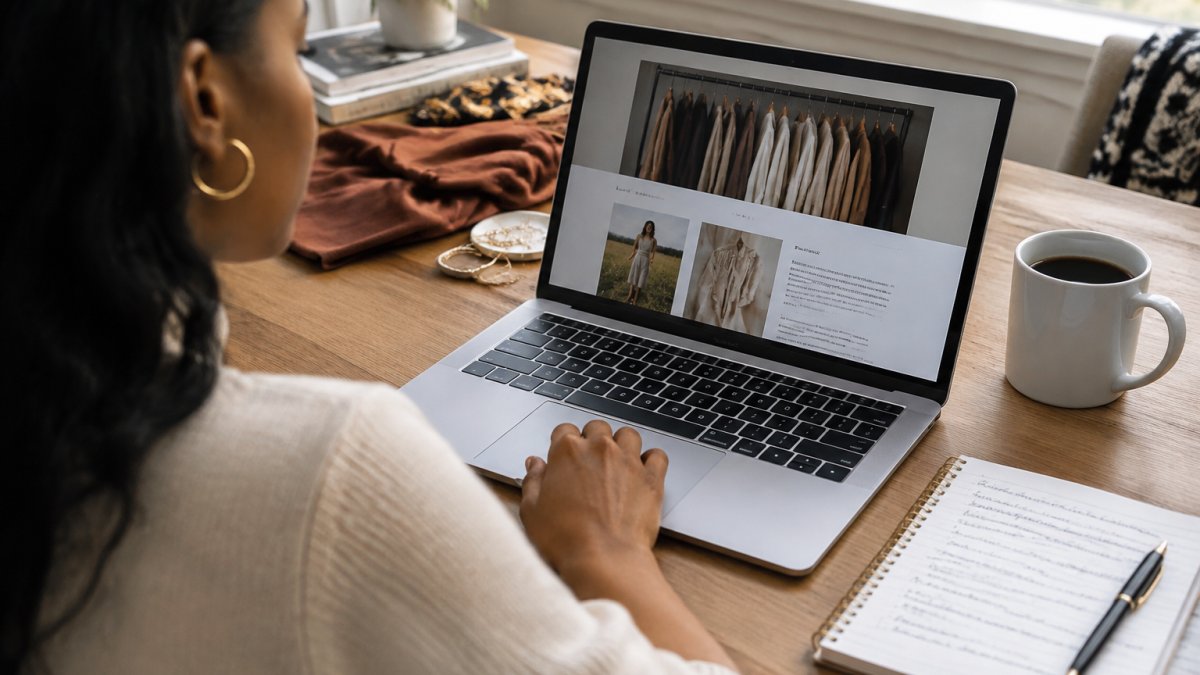
- Minutes 0-5: Skim the brand's transparency or impact page.
- Minutes 5-10: Search for a published supplier or factory list.
- Minutes 10-20: Look up any certifications on the certifier's site.
- Minutes 20-25: Check one independent rating tool.
- Minutes 25-30: Score the brand and note gaps.
When you know how to verify ethical fashion brands online, you stop guessing. You also spot the difference between a brand that publishes real data and one that repeats slogans.
Ethical Clothing Certifications: What Each One Covers and What It Does Not
Ethical clothing certifications are third-party standards that confirm a product, facility, or management system meets specific criteria. The key word is specific. No single certification covers everything, and a logo on a product page is a claim, not proof. The verification work happens on the certifier's own site, not the brand's.
What the Common Certification Families Actually Cover
- Fair trade and fair labor certifications focus on wages, worker voice, and conditions at the facility level. They typically do not certify fiber growing or dye chemistry.
- Organic fiber standards cover growing and processing of the fiber, pesticide use, separation from conventional fiber, and chain of custody. They say nothing about labor conditions in a cut-and-sew factory.
- Recycled-content standards verify the percentage and chain of custody of recycled material. They do not verify that the garment was made in a safe facility.
A common pattern is a brand stacking two or three logos on a product page and implying the garment is fully vetted. Each logo answers a narrow question. Your job is to map which question each one answers and which ones are left open.
How to Verify a Certificate, Not Just a Logo
Run these checks on the certifier's website, not the brand's:
- Find the certificate holder's legal name. Certificates are issued to a company or facility, not to a marketing name. If the brand's name does not appear, ask which entity holds it.
- Confirm the certificate is current. Look for an issue date and an expiry or next-audit date. An expired certificate is not evidence of current practice.
- Check the scope statement. Certificates list covered products, processes, or facilities. A certificate for a dyehouse does not cover the garment factory, and a certificate for one product line does not cover the whole catalog.
- Check the facility or site list. Many certifiers publish a searchable database of certified sites. Search the factory name from the brand's supplier list against it.
- Check the standard version. Standards get revised. A certificate against an older version may not reflect current requirements.
- Look for the certification body's accreditation. Third-party certifiers are themselves accredited by national accreditation bodies; an unaccredited certifier's mark carries less weight.
Watch out: a brand that shows a certification logo with no certifier name, no certificate number, and no link to a database entry has given you a graphic, not evidence. Ask for the certificate number and the certifying body, then look it up yourself.
Scope Traps to Expect
- Facility scope vs. product scope. A factory may be certified while the fiber, trim, or subcontractor is not.
- One product line vs. the whole brand. A capsule collection can be certified while the core line is not.
- Tier coverage. Most social audits cover final assembly, not fabric mills or raw material suppliers.
The U.S. Department of Labor's resources on labor standards can help you understand what worker protections a credible social standard should address, which makes it easier to judge whether a certification's scope is meaningful.
Spot Greenwashing Red Flags and Demand Claim Substantiation
Greenwashing is when a brand markets itself as more ethical than its evidence supports. The red flags are predictable:
- Vague words like "eco-friendly" with no specifics
- No supplier list or factory disclosure
- Certifications shown without a certifier name
Demand claim substantiation. Ask the brand to point to the data behind a claim. If they cannot, that tells you something. If you want to see which Black-owned brands actually back up their promises, read Which Black-Owned Streetwear Brands Are Worth It in 2026?.
Separate Product-Level Claims From Brand-Level Promises
A brand can make a bold promise about its values while a single product tells a different story. Brand-level claims describe the company's overall commitments, a supplier code, a climate target, a published factory list. Product-level claims describe the specific item in your cart: its fiber, its factory, its certificate. A brand-wide rating or policy does not automatically apply to every garment, supplier, or material, so verify the item, not just the company.
Why the Two Levels Diverge
- Multi-supplier reality. Most brands use several factories and fabric mills. A brand-level policy may be enforced at the main factory and not at a subcontractor.
- Capsule and collaboration lines. A certified or traceable capsule can sit next to a core line with no such claims.
- Material mix. A garment can be 60% certified organic cotton and 40% conventional fiber, or have a certified shell and an uncertified lining.
A Product-Level Verification Sequence
Work from the item backward to the evidence:
- Read the fiber content and country of origin on the care label. These are regulated disclosures, which makes them a more reliable starting point than a homepage banner.
- Find the product page's specific claims. Note the exact wording, "made with organic cotton" is not the same as "certified organic." Save a screenshot with the date.
- Match the claim to a certificate. If the page cites a certification, get the certificate number and check the certifier's database for the product category and facility.
- Match the product to a supplier. Use the brand's supplier or factory list to identify which facility likely made the item, then check whether that facility appears in the certifier's site list.
- Check the traceability record. Some brands publish a product-level traceability page listing the factory, mill, and raw material source for a specific style. If one exists, confirm the style number matches.
- Ask the brand directly. Request the factory name, the certificate number, and the date of the most recent audit for that style. A brand that can answer quickly is telling you something; so is one that cannot.
Watch out: a product page that shows a certification logo but no certificate number, and a brand that cannot name the factory for a specific style, has given you a brand-level promise applied to a product it may not cover.
What to Do When the Item Has No Product-Level Evidence
Many small or opaque brands will not have a traceability page or a certificate tied to a style. That does not automatically disqualify them, but it changes the questions you ask:
- Which factory made this style, and is it on your published supplier list?
- Which mill supplied the fabric, and is the fiber certified?
- What percentage of the garment, by weight, is covered by the claim?
Score the answers as evidence, not as reassurance. A specific answer with a date and a name is stronger than a warm paragraph about values. If the brand cannot answer, record that as a gap on your scorecard rather than treating silence as a pass. The real origin story and values behind a boutique are worth reading, too, which is why we share the Shea Marne story of culture, community, and legacy.
Build Your Own Ethical Brand Scorecard Before Your Next Purchase
A scorecard turns your values into a decision tool you can reuse. Build one once, then run every brand through it. Here is a simple template.
- Worker rights policy published (20 points)
- Living wage commitment stated (20 points)
- Supplier or factory list available (20 points)
Score each brand out of 100. When you are ready to apply your scorecard to a boutique with a stated purpose, you can explore the Shea Marne collection and check its commitments against your own criteria.
Frequently Asked Questions
How can you tell if a fashion brand is ethical?
Start with public evidence, not marketing language. Look for a published supplier list, named factories, and specific policy commitments on wages, worker rights, and chemical management. Then check whether any third-party certification covers the actual product you are buying, not just one item in the line. A brand that answers supply-chain questions with named facilities and dated audits is easier to trust than one that only uses words like conscious or responsible.
What certifications can help verify ethical clothing claims?
Common certifications include Fair Trade for fair wages and worker conditions, the organic textile standard for fiber content, and independent audit programs for chemical management and waste reduction. Each certification has a defined scope, so confirm which facility, product, or fiber it covers. A certificate for one organic cotton T-shirt does not verify the rest of a collection. Ask the brand for the certificate number and the certifying body, then check the body's public directory.
Are ethical fashion brand ratings reliable?
Ratings are useful starting points, not final verdicts. A clothing brand ethical rating usually scores a brand out of 100 across indicators like transparency, labor conditions, and environmental impact. Reliability depends on whether the rating publishes its methodology, cites public evidence, and updates regularly. Treat a high score as a signal to dig deeper, and a low score as a reason to ask the brand direct questions about its supplier list and audit results.
How can you spot greenwashing in fashion?
Watch for vague claims with no evidence, such as eco-friendly or sustainable without a defined standard. Other red flags include a certification logo with no scope statement, a single green product line used to imply the whole brand is ethical, and targets set far in the future with no current data. Ask the brand for the specific fiber content, factory disclosure, and audit date behind any claim. If the answer is a slogan rather than a document, treat the claim as unverified.
The real test is whether a brand will show you its evidence when you ask. At Shea Marne Luxury Collection, we build around timeless elegance, cultural pride, inclusive sizing, and a purpose-driven approach to philanthropy. We want you to hold us to the same standard you apply to every label. Get started with Shea Marne Luxury Collection and shop with a scorecard in hand.